
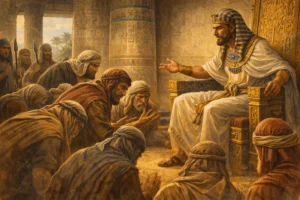

Why Didn’t Yosef Notify His Father?
One of the most challenging questions in the Yosef narrative is why he never sent word to Yaakov to let him know he was alive. As Egypt’s viceroy, Yosef had the means and opportunity, yet he remained silent despite knowing his father was grieving terribly. Some mefarshim suggest he wanted to avoid embarrassing his brothers. But Rav Kahana offers a more nuanced explanation: had Yaakov discovered the full truth, the pain of betrayal would have been even more unbearable than the pain of presumed loss. Yosef refrained not out of indifference, but out of deep sensitivity to his father’s emotional well-being.
Yosef’s Orchestration: A Path to Teshuva
Yosef’s treatment of his brothers often appears harsh, as if he’s tormenting them. However, the teaching suggests that Yosef perceived himself as a pawn in Hashem’s divine plan. He understood that only through challenge and confrontation could the brothers reach the depth of teshuva necessary for true repair. Their eventual confession, not merely for their actions, but for ignoring Yosef’s cries, signals their internal transformation. Yosef withholds revealing himself until the moment true brotherhood is restored.
The Turning Point: Yehuda’s Self-Sacrifice
The pivotal moment comes when Yehuda is prepared to give himself up in place of Binyamin, even though he believes Binyamin is guilty. Yehuda’s willingness to bear the consequences for the sake of his brother and father moves Yosef to tears. Yosef recognizes that his family has healed, and only then does he reveal his identity. His goal was never vengeance; it was tikkun, and it has been achieved.
The shiur ends with a deeply personal reflection on Rav Kahana’s own father, who survived the Holocaust and internalized his father’s last words: “Watch over your brothers.” This legacy of achdut and responsibility echoes the very message Yosef hoped to instill in his own family.
“NOTE: The above is a summary based on the original teaching.”